

Reimagining Futures: Research in an Age of Opportunities
14th March, 2026
About FLAME Undergraduate Research Day 2026
The Undergraduate Research Committee of FLAME University invites submissions for the second edition of the FLAME Undergraduate Research Day, an interdisciplinary platform celebrating undergraduate research, dialogue, and collaboration across fields. Building on last year’s theme, “Boundaries and Bridges in the Age of Disruption,” this year’s theme, “Reimagining Futures: Research in an Age of Opportunities,” explores how research can illuminate pathways toward more sustainable, equitable, and innovative futures.
In an era marked by uncertainty and transformation, FLAME Undergraduate Research Day invites students to move beyond responding to disruption, calling them to actively imagine, design, and build new frameworks for the future. We welcome work that interrogates systems, draws insights across disciplines, and redefines knowledge creation for the world ahead.
We invite abstracts based on primary and secondary empirical research, work in progress, conceptual and critical analyses, systematic reviews, case studies, and proposed research from currently enrolled undergraduate students.
The FLAME Undergraduate Research Day will be held in fully in-person (offline) mode on FLAME University campus in Pune.
Sub-Themes
Participants may submit abstracts on the following sub-themes:
|
Sub-Theme |
Aspects |
|
Interdisciplinary Futures |
|
|
Sustainability and Regeneration |
|
|
Ethics and Innovation |
|
|
Culture, Identity and Global Exchange |
|
|
Resilience and Wellness |
|
|
Policy and Governance |
|
|
Equity, Justice and Social Transformation |
|
|
Creativity and Human Flourishing |
|
|
Data, Artificial Intelligence (AI) and the Digital Future |
|
Abstracts that do not align with any of the above sub-themes but address the overarching theme are also welcome.
Abstract Submission Guidelines
- All abstracts must be written in English.
- Only original abstracts can be submitted. Please ensure that the same abstract (and paper title) are not submitted to other conferences.
- Submitted abstracts may include primary or secondary data, work in progress, conceptual and critical analyses, case studies, systematic reviews, and proposed research.
- The cover page of the abstract document must include:
- Title of the Abstract
- Details of the author(s): Name(s), institutional affiliation, email address (The presenter should be listed as the first author)
- Abstract must be between 300-500 words (excluding cover page and keywords) and must include the following aspects:
- Background
- Aims and objectives
- Materials/methods (where applicable)
- Results/Main findings/Expected findings
- Conclusions and Implications
- A maximum of 5 key words must be placed under the abstract.
- Please note that the abstract document must be written in Times New Roman, 12 point. In addition, the title of the abstract must be in bold and centered.
- If generative and assistive AI has been used in preparing the abstract, author(s) are required to include a footnote in the abstract document mentioning the same. Failure to do so will result in the abstract not being considered for further processing.
- Abstracts must be strictly submitted on or before the deadline.
Abstract Submission
To submit abstract, please visit:
Submission FormRegistration Guidelines
- Undergraduate students from outside FLAME University and the accompanying persons must pay a registration fee of Rs. 900/- (inclusive of 18% GST)
- FLAME University students are exempt from the registration fee payment.
- On-the-spot registration fees for participants outside FLAME University will be Rs. 1500/- (inclusive of 18% GST).
- Presenters may register once their abstracts are accepted for presentation.
- Registration fees are non-refundable.
Registration
To register, please visit:
Registration FormImportant Dates
- Abstract Submission Deadline: 14th February 2026
- Notification of Abstract Acceptance: 20th February 2026
- Registration Deadline: 25th February 2026
Contact Details
Keynote Panelists
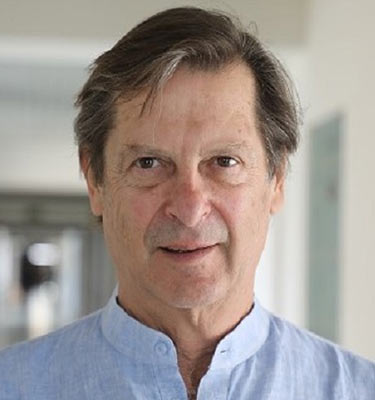
Professor & Co-Director of Undergraduate Education
Psychology Department
University of Colorado, Colorado Springs
Professor Frederick L. Coolidge received his BA, MA, and PhD from the University of Florida and completed a two-year Postdoctoral Fellowship in Clinical Neuropsychology at Shands Teaching Hospital, University of Florida. He came to UCCS in 1979. He was Chair of the Psychology Department from 1986-1989 and served as the Clinical Director from 1981-1984. Dr. Coolidge is a three-time Fulbright Fellowship Award recipient (India, 1987, 1992, 2005). He has received three teaching awards including the lifetime designation, University of Colorado Presidential Teaching Scholar, and he received the UCCS Letters, Arts, and Sciences Annual Outstanding Research and Creative Works Award, in 2004, and the UCCS Annual Faculty Award for Excellence in Research in 2006. For the month of March 2015, he was appointed Senior Visiting Scholar at Oxford University, Keble College, UK. Prof. Coolidge has been a Visiting Professor at the Indian Institute of Technology Gandhinagar, India, teaching courses on brain evolution and sleep and dreams.
Dr. Coolidge is a member of the Association of Psychological Science, the European Society for Human Evolution, the Society for American Archaeology, and International Union of Prehistoric and Protohistoric Sciences. He teaches introductory and advanced undergraduate statistics, cognitive evolution, evolutionary neuropsychology, abnormal psychology, and sleep and dreams.
Dr. Coolidge's research interests lie in the broad area of brain-behavior relationships including personality and neuropsychological assessment of children (e.g., ADHD, conduct disorders, etc.), adults, and older persons, and the evolutionary origins of cognition (cognitive archaeology). He also conducts research about the brains and minds of hominins (since 6 million years ago) and the things they made (stone tools, art, etc.). Specific lifespan psychopathology topics include autism spectrum disorder, gender dysphoria, antisocial/criminal behavior (in world dictators and others), and childhood/adolescent/adult personality disorders. Also, he conducts twin studies of the genetic contributions to a wide variety of behaviors, including neurotypical and psychopathological behaviors (PTSD, psychotic disorders, etc.). He also conducts linguistic studies in the evolutionary origins of language, and its purposes (pragmatics of speech), and ontology (infant language).
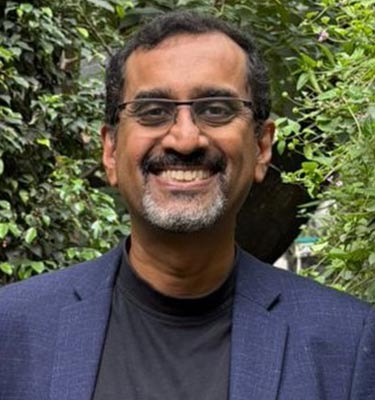
Founder and Director, The Neuropathways Institute, Bengaluru
Former Dean, School of Psychological Sciences, Christ University, Bengaluru
Former Dean, School of Social Sciences, Christ University, Bengaluru
Dr. Tony Sam George is the Director of the NeuroPathways Institute and a leading voice in mental health, counselling psychology, and higher education. With over three decades of teaching, research, and clinical experience, he integrates neuroscience, psychotherapy, and evidence-based wellbeing frameworks to train professionals and support diverse communities. Dr. George obtained his doctoral degree (PhD) from the National Institute of Mental Health and Neuro Sciences (NIMHANS), Bengaluru. His doctoral research focused on the role of group psychotherapy in reducing social disability among persons affected by obsessive compulsive disorder (OCD).
Over his career spanning close to three decades, Dr. George has served on several International and Regional Boards, contributed to building capacity in developing wellbeing initiatives in India, Mexico, South Africa, Canada and the United States of America. He frequently consults with nonprofits and has established several nonprofit initiatives in the areas of leadership development, wellbeing and counselling, life skills and digital training and education. He has held major research grants with the United States (US) Department of State, the Commonwealth of Australia and the United States Education Fund. Dr. George has designed and implemented effective employee assistantship programmes in multinational companies in India and is a featured keynote speaker at International forums around the world.
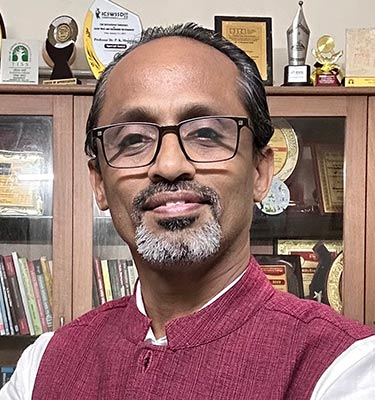
Professor - Social Work
Former Dean (Academic Affairs)
Tata Institute of Social Sciences (TISS), Mumbai
Dr. P.K. Shajahan is Professor of Social Work and former Dean of Academic Affairs at Tata Institute of Social Sciences, Mumbai. A pioneer in advancing People-Centred Social Innovation (PCSI), his scholarship spans across social enterprises, school education & accountability, and global social work. He has published widely, with numerous Scopusindexed articles and co-edited book Remaking Social Work for the New Global Era (Springer, 2022). He also serves as Series Editor for SpringerBriefs on Advancing Social Work Research, Policy, and Practice.
His recent policy research along with other colleagues from TISS in developing a comprehensive compensation policy for the project affected fisherfolk of the Mumbai Coastal Road Project has been widely acknowledged in the policy circles. This has led to Bombay High Court noting this policy as a reference case while admitting another case related to similar impacts on fisherfolk.
An acclaimed academic leader with more than three decades of professional experience in Social Work and Social Development, Dr Shajahan has been a visiting faculty member at leading universities in the USA and Europe, contributing to global dialogues on social innovation and participatory development. He plays key roles in several international networks, such as Founding Member and Co-President of the Critical Edge Alliance, Member of the International Consultative Board of the International Council on Social Welfare (ICSW), and Member of the Task Force for Global Agenda for Social Work and Social Development. Earlier, he served as the Vice President of the International Council on Social Welfare and a Board Member of the International Association of Schools of Social Work (IASSW).
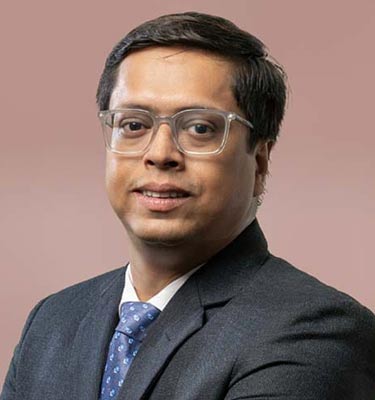
Chairperson of PhD Programs (Regular & Executive)
Associate Professor of Information Systems (OM/QM/IS Area)
Indian Institute of Management Udaipur (IIMU)
Dr. Probal Mojumder currently serves as an Associate Professor of Information Systems at the Indian Institute of Management Udaipur (IIMU). He is also the Chairperson of IIMU's PhD Programs (Regular & Executive) and Advisory Board Member for IIMU’s Center for Digital Enterprise.
His research spans a wide range of business and societal questions, employing methodologies such as econometrics, AI/ML, and randomized experiments. Probal investigates how IT artifacts shape digital platforms, with a particular focus on addressing societal challenges. His recent work explores topics including digital crisis communication and AI ethics, alongside his continuing interest in online platform research.
Probal's research findings have been published in prestigious international academic journals, including Management Science (MS), Information Systems Research (ISR), and Production and Operations Management (POM). Additionally, his work has been showcased at prominent national and international conferences such as the International Conference on Information Systems (ICIS), Workshop on Information Systems and Economics (WISE), INFORMS Conference on Information Systems and Technology (CIST), Workshop on Statistical Challenges in E-Commerce Research (SCECR) and the India Management Research Conference (IMRC) at IIM Ahmedabad. His research and profile have garnered attention in various media outlets and university magazines, including Financial Express, Phys.org, Forensicmag.com, HBS Working Knowledge, NYU Stern News, UMN News, Maryland Smith Research, Simon Business Magazine, and ISB Canvas.
Probal earned his Masters in Quantitative Economics (MSQE) from the Indian Statistical Institute (ISI) Kolkata in 2010. He was a Research Associate at the Indian School of Business, and held Postdoctoral Research Associate role at the Marshall School of Business, University of Southern California. In 2018, he obtained his doctoral degree in Business Administration (Information and Decision Sciences track) from the Carlson School of Management at the University of Minnesota.
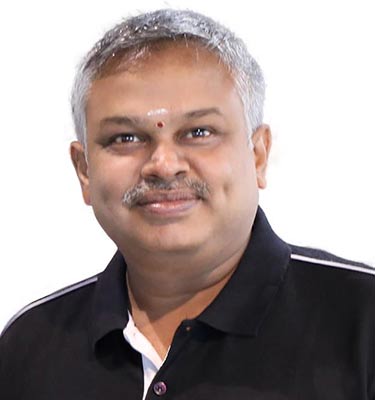
Deputy Chief Information Officer
Global Head - Internal Audit & CSR Trustee
[24]7.ai, Bengaluru
Dr. Ganesaraman K is Deputy CIO, Global Head - Internal Audit & CSR Trustee. He is also a Professor of Practice at FMC, MSRUAS, Bangalore. He is also Academic Council Member at SASTRA University. His earlier work experiences have been associated with GE Healthcare, Visteon, and Lucas TVS.
He obtained his Ph.D. from the Indian Institute of Science (IISc), Bangalore (2021). He was awarded a Gold Medal from the Indian Economic Association for the thesis on "Tech Startup Failures in India: Causal Attributes, Life Expectancy, and Exits”. He is a qualified cost and management accountant from ICWAI Institute (2013), a triple gold medalist in PGDBA from LIBA (2001), and an engineering gold medalist from SASTRA (1996).
Undergraduate Research Committee
Assistant Professor - Psychology;
Chair - Undergraduate Research Committee
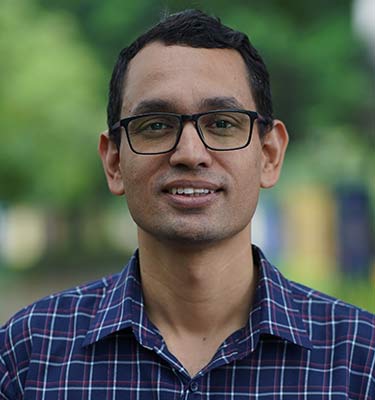
Assistant Professor - Human Resources
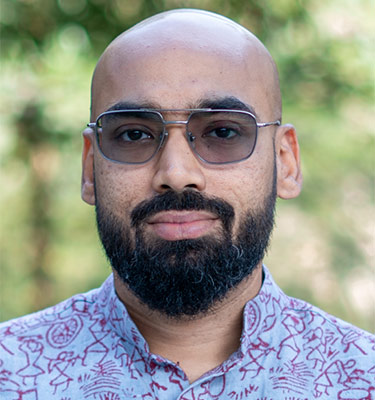
Assistant Professor - International Studies

Assistant Professor - Psychology
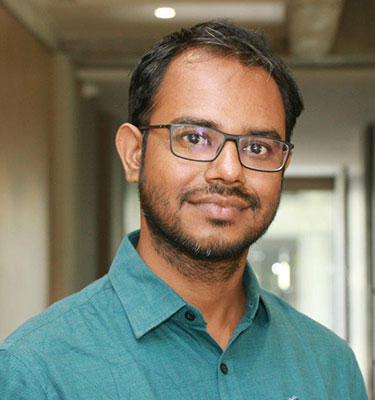
Assistant Professor - Philosophy & Critical Thinking
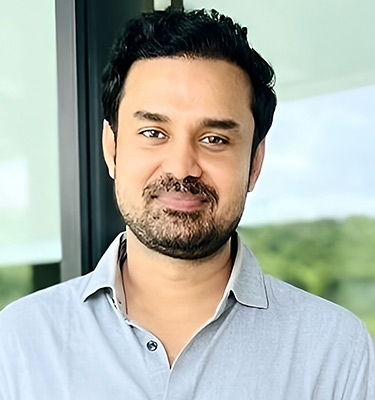
Assistant Professor - Public Policy
Student Committee

Arrshia Singal
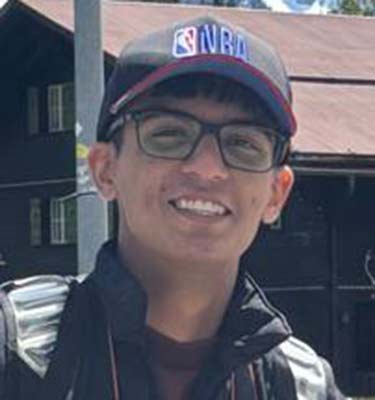
Adwaiy Khanna
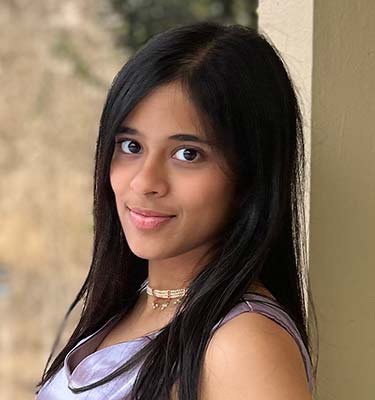
Akanksha Virginkar
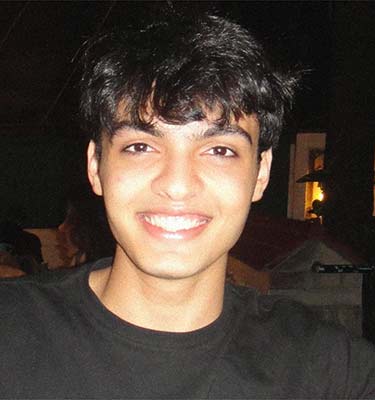
Arjun Bumb
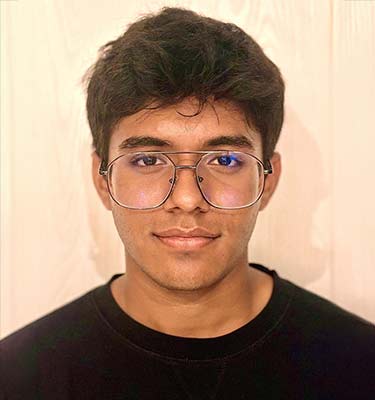
Arav Gaglani
Dhiraj Ugale
Eepsha Aamon
Medhavi Regmi
Nikita Chaana
Sai Amogh Mutalik Desai