



VOICE OF FLAME
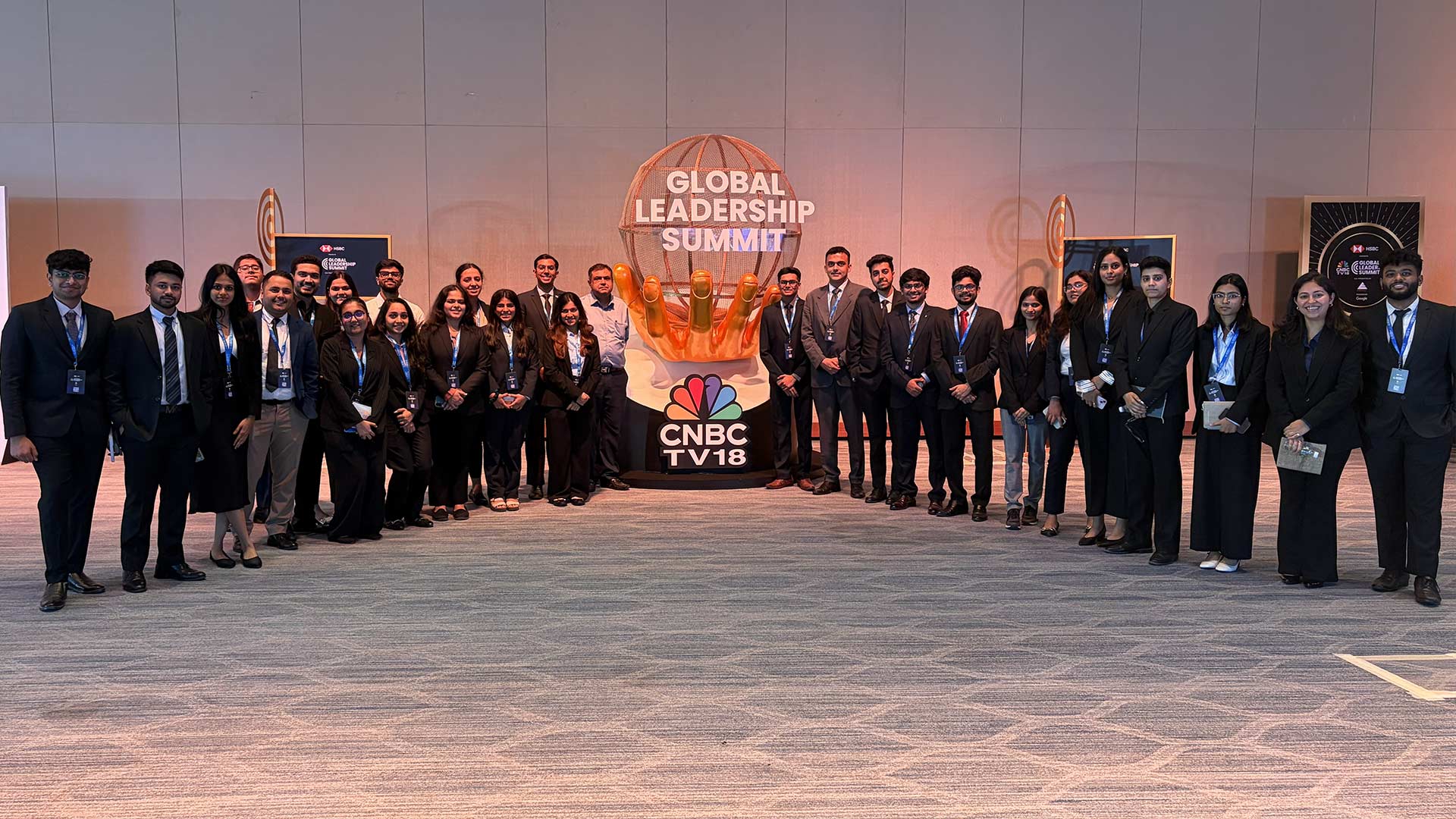

Attending the Global Leadership Summit 2025
A Confluence of Great Minds: Leaders Steering Progress
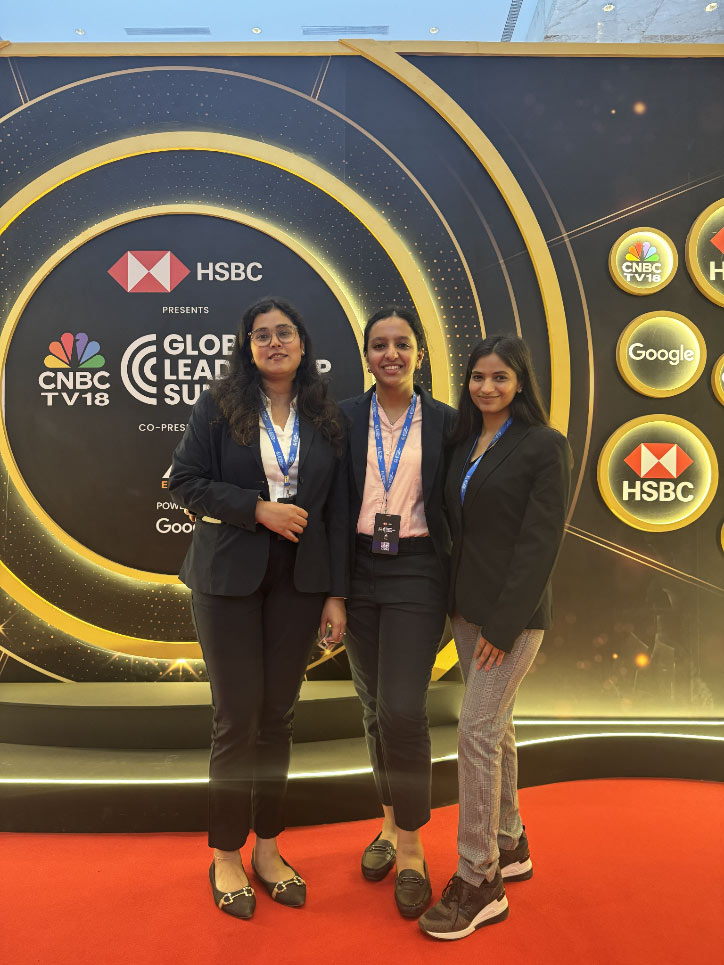
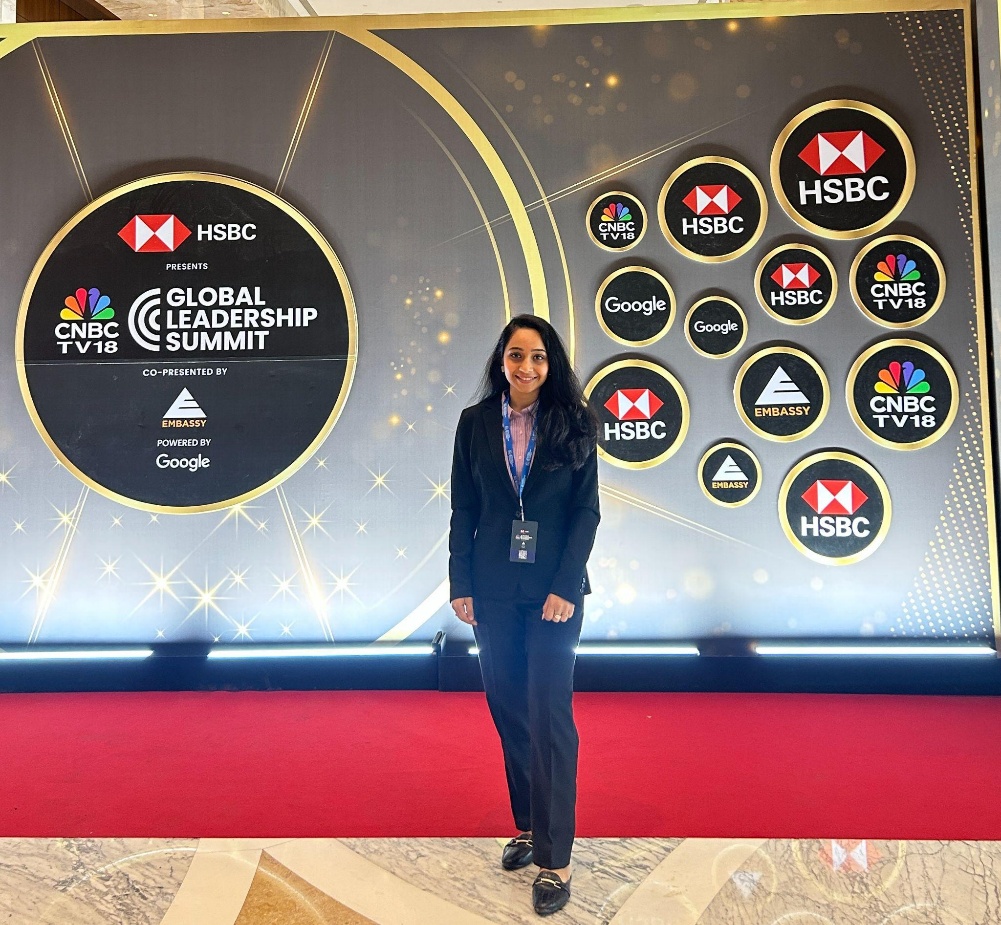
Attending the CNBC-TV18 Global Leadership Summit 2025 at the Jio World Convention Centre, Mumbai, proved to be a defining experience for thirty MBA students from FLAME University, accompanied by Prof. Sujeet Savargaonkar, Faculty of Marketing at FLAME University. The summit, presented by HSBC and powered by Google, was centered around the theme “The India Advantage” and brought together some of the brightest minds shaping the country’s economic, social, and technological future. It was a confluence of ideas, perspectives, and possibilities, where policymakers, CEOs, entrepreneurs, and innovators decoded what gives India its unique edge in an era of rapid geopolitical realignment and tectonic technological change.
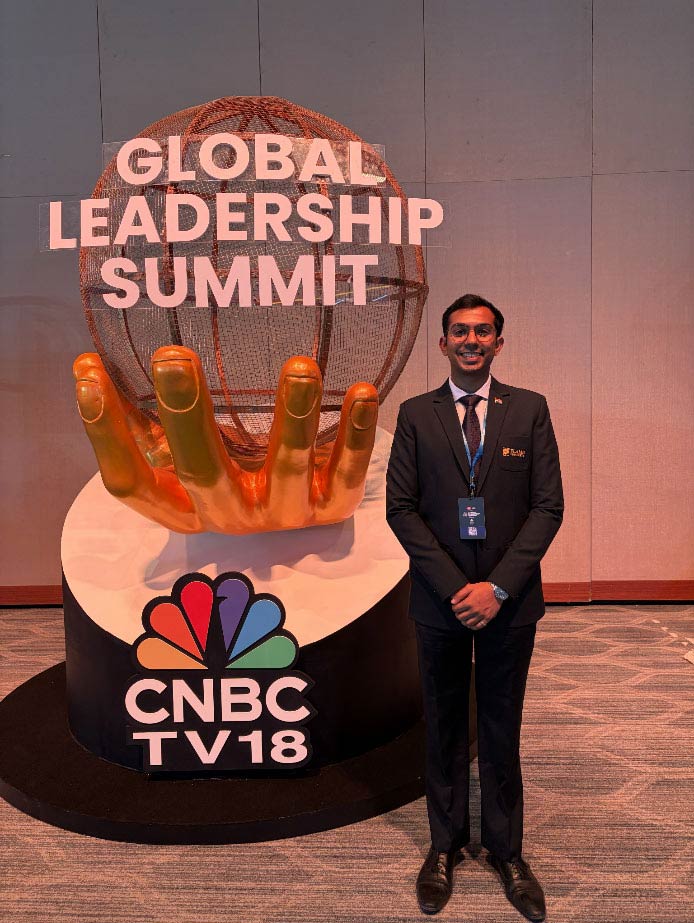
The day began with an address by B.V.R. Subrahmanyam, CEO of NITI Aayog, who spoke about India’s next phase of growth. He outlined his vision of a cluster-based approach, where the nation could focus on specific sectors, replicate success stories, and build specialized centers of excellence. His call to “invest in your people” resonated deeply. It stood out for Labdhi Shah, a postgraduate student, who says it is “a reminder that skilling, education, and empowerment are the real engines of sustainable growth.” Her words struck a chord with the cohort, who agreed that the summit was not merely about macroeconomics or technology but about people—the ultimate source of India’s strength.
It stood out for Vishal Shah, another postgraduate student, who says, “India’s true advantage lies not only in its economy or technology, but in the spirit of its people.” For him, leadership meant empathy, empowerment, and purpose. This idea was reinforced by K.V. Kamath, Chairman of Jio Financial Services, who observed, “Transformation starts with building what you don’t have.” Kamath’s emphasis on structural reforms and financial resilience, coupled with his belief that India can stand independently while collaborating wisely, underscored the notion that true leadership is pragmatic optimism in action.
The Importance of Technology and Innovation: Foundation of the Future
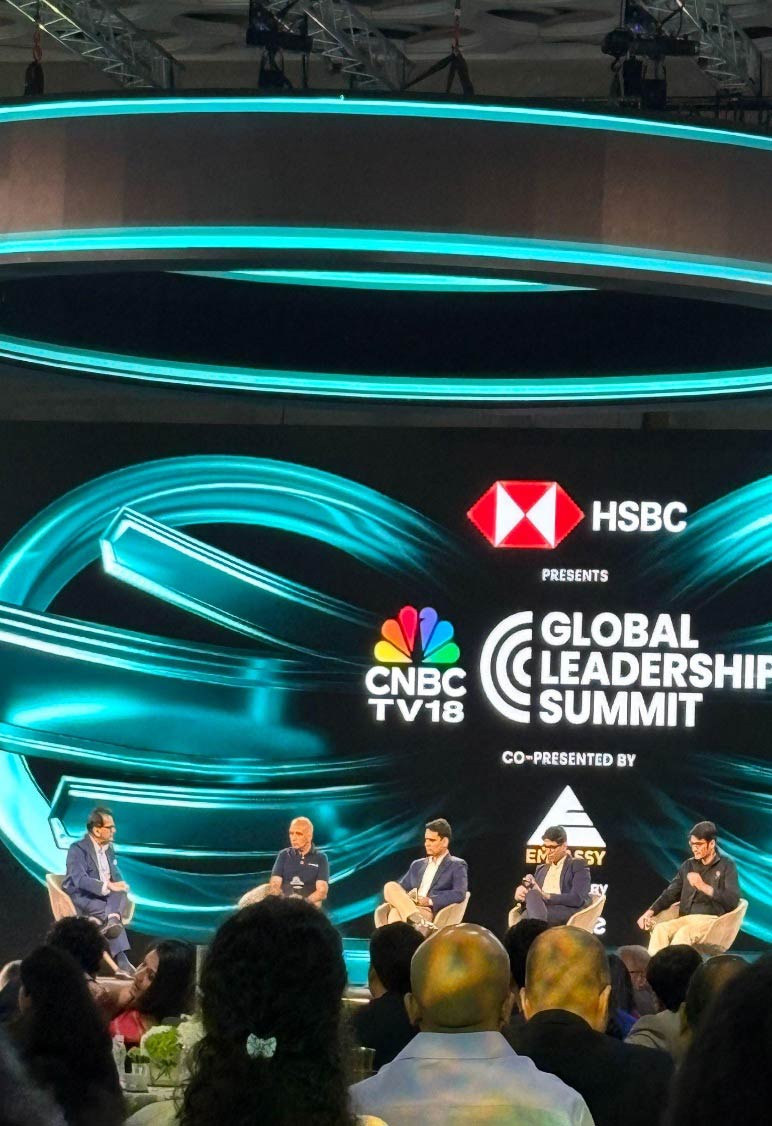
The speakers underscored that innovation must remain rooted in purpose. Phani Addepalli, co-founder of Swiggy, emphasized that its true goal is to make life easier, not merely faster. His line—“Make life easier, not just faster”—stood out for Labdhi, who says it is “a reminder that the best brands win hearts before they win markets.”
Building on this theme, Peyush Bansal, co-founder and CEO of Lenskart, shared how technology can democratize access and convenience when guided by empathy. From Lenskart’s mission to make eyewear affordable to Urban Company’s focus on skilling and service excellence, every story at the summit reinforced the belief that India’s advantage lies not just in scale, but in the combination of people, purpose, and progress.
Offering a global perspective, Stanford historian Niall Ferguson drew from the classic tale of the hare and the tortoise: “If China is the hare and India is the tortoise, the tortoise can still win the race.” The analogy is a beautiful metaphor for India’s resilience and adaptability. Ferguson stressed that India’s democratic and institutional strengths provide a long-term edge—if the nation invests deeply in primary education, manufacturing, and healthcare. In the age of AI, leadership isn’t about having all the answers. It’s about asking the right questions.
Artificial Intelligence, Global Trade and Foresight
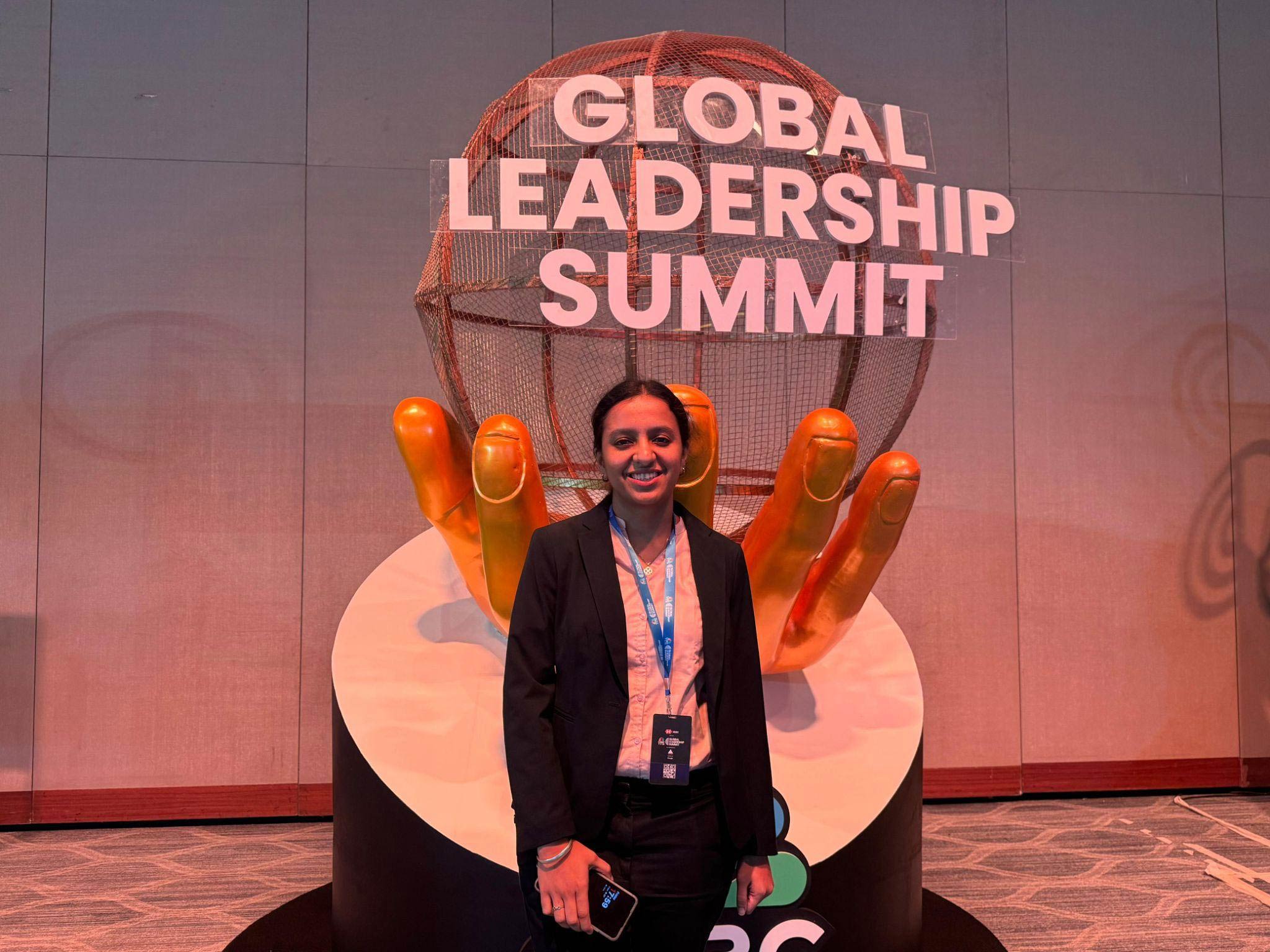
Artificial Intelligence emerged as a dominant theme across sessions—not as a buzzword, but as an important consideration for leadership. “AI is fast becoming the language of modern leadership across boardrooms.”
Niyati Gadhiya, a postgraduate student, says the summit was invaluable in understanding how AI is influencing strategic business decisions. Christophe De Vusser, CEO and Worldwide Managing Partner at Bain & Company, encapsulated this sentiment perfectly: “Those who are the first to develop and implement technology become the first to gain its incentives.” His call for proactive innovation was a wake-up call for future leaders to embrace agility and foresight.
The experience was eye-opening for Devansh Dalal, a student, who says it offered firsthand insights into the mindset of CEOs navigating the complexities of technology and innovation. Alisha Prusty, a postgraduate student, echoed a similar sentiment, saying, “Listening to some of the top leaders talk about India’s growth and future really opened my mind. I felt inspired to think beyond the usual and keep learning.” These reflections showed that the summit was not just about absorbing information but about redefining perspectives.
The sessions also shed light on India’s macroeconomic position. Subrahmanyam’s optimism about foreign direct investments, even amid global trade uncertainties, underscored India’s growing attractiveness as a market. Kamath pointed out that while market valuations fluctuate, the underlying strength of India’s balance sheets and corporate fundamentals remains intact. His call for the Global North to invest meaningfully in the Global South was a reminder of the larger interconnectedness of economic growth.
The State of India: Growing into Viksit Bharat
Adding a regional perspective, Maharashtra Chief Minister Devendra Fadnavis shared his roadmap for the state’s infrastructure development, citing projects such as the Bandra–BKC–Airport tunnel, the 24-kilometer bridge between Bhayandar and Virar, and the ambitious Bullet Train project. “In total, projects worth ₹4 lakh crore are under development,” he said, reinforcing India’s commitment to large-scale transformation. For students witnessing this announcement firsthand, it stood out as an affirmation that India’s growth narrative is as infrastructural as it is intellectual.
Throughout the day, a recurring idea tied the sessions together: India’s strength lies in its resilience. It stood out for Vishal Shah, who says, “The India Advantage lies not in speed, but in resilience—in leaders who build patiently, innovate with empathy, and empower people through purpose.” Dhairya Vora, another student, added that while India is an attractive market and is steadily becoming a global hub across sectors like finance, logistics, and AI, there remains a pressing need to focus on manufacturing, skilling, and education to realize the vision of a Viksit Bharat by 2047.
The summit also stood out for its diversity of voices. From Amitabh Kant’s reflections on India’s global leadership role post-G20 to Ryan McInerney’s insights on digital finance and Oliver Jay’s vision for global strategy, every speaker brought a different dimension to the theme. Their perspectives merged into a larger message: India’s rise will be defined not by isolated achievements, but by the synergy between government, industry, and citizens.
By the end of the summit, FLAME University students listened to leaders and began to reflect on what leadership means for them. The event provided a truly substantive classroom—one that bridged academic theory with lived experience.
Decoding The India Advantage: Lessons in Leadership and Growth
The students’ testimonials revealed a common realization: leadership today is multidimensional. It requires adaptability, empathy, and the courage to navigate uncertainty. Labdhi Shah says, “Leadership grounded in purpose, people, and progress—that’s what this summit taught me.” For others, it was about connecting the dots between national ambition and personal responsibility.
Ultimately, the CNBC-TV18 Global Leadership Summit 2025 was more than a gathering of leaders; it was a mirror reflecting India’s journey toward becoming a more resilient, innovative, and inclusive nation. The day left an indelible mark on every attendee, reinforcing the belief that India’s progress is measured not merely in economic terms but in its capacity to blend intelligence with integrity and growth with empathy.
As the students returned to FLAME, the discussions continued about AI, education, innovation, and purpose. What they carried home was not just notes or photographs but a renewed sense of conviction. Vishal says, “Progress today is not measured by GDP, but by empathy, adaptability, innovation, and purpose.” The summit had achieved what it set out to do: to decode “The India Advantage,” not as an abstract idea, but as a lived experience that will continue to shape how these young leaders think, act, and build the future.
(Author: Shriyans Chaudhari, Postgraduate Student)